Structure First, Applications Second
Most job searches fail not from lack of effort but from lack of structure. You apply in bursts, lose track of where you applied, skip follow-ups, and burn out before anything lands. A system does not find the job for you. It makes sure your effort actually counts.
A repeatable daily system
A job hunt system is a simple framework that organizes your search into daily actions you can repeat without burning out. It turns scattered effort into consistent momentum.
Not a motivation plan
You do not need another feel better button click. You need a list of what to do today, a way to track where things stand, and a structure that keeps working even on low-energy days.
Build Your Daily Application Routine
Random applications lead to random results. A small number of targeted, well-prepared applications every day beats fifty rushed submissions every week. The goal is quality and consistency, not volume.
Your daily loop
- ✓ Set a daily target — 3 to 5 quality applications, not 20 rushed ones
- ✓ Log every application with the date, role, company, and status
- ✓ Assign a next action to every open application — follow up, wait, or close
- ✓ Review your open applications every morning before starting new ones
Tracking what you have already sent stops you from losing opportunities to silence.
A simple log on paper is more reliable than a mental note. If it is not written down, it does not exist. I built the job application log in the Master Job Search System specifically because I kept watching people lose track of opportunities they had already put effort into.
Prepare for Interviews Before You Need To
Most people start interview prep after they get a call. That leaves you scrambling in 24 hours when you should be calm and ready. Build your prep now so the call is just a trigger, not a panic.
What to prepare in advance
- ✓ Write out 3 to 5 strong answers to common questions
- ✓ Have a clear, confident answer for "tell me about yourself"
- ✓ Prepare one specific example for each role you are targeting
- ✓ Review your answers once a week, improve one each time
What to do the day before
- ✓ Reread the job description carefully
- ✓ Review the specific application you sent
- ✓ Prepare two or three questions to ask them
- ✓ Confirm logistics — time, format, who you are meeting
Writing your answers on paper and reading them aloud is more effective than reading them silently. Your brain processes spoken words differently than scanned text. I know it feels awkward — do it anyway. You will notice the difference the first time you actually say your answer out loud in an interview.
Keep Everything in One Visible Place
A job search spread across browser tabs, sticky notes, and memory is a job search that loses things. A physical, printable system puts everything in one place — and keeps it there.
Nothing falls through
Applications, follow-ups, and interview dates all have a home. Not in your head.
Progress stays visible
When you can see what you have done, you keep going. Invisible progress stalls.
Less mental load
Your energy goes into the search, not into remembering where everything is.
This System Was Built for Situations Like Yours
If You Feel Burned Out From Job Searching
Job search burnout is real. When applications feel endless and responses are silent, exhaustion builds quickly. The answer is not more applications. It is more structure. When your job search feels chaotic, the solution is clarity, tracking, and defined daily limits.
A simple organized system reduces mental fatigue and gives you measurable progress instead of emotional guessing.
If You’ve Been Applying With No Results
If you have applied to many jobs and heard nothing back, the issue is often not effort but visibility and tracking. Without a tracking system, it is impossible to know what is working and what needs adjustment.
An organized job hunt allows you to refine roles, follow up strategically, and adjust your approach based on data instead of frustration.
If You’re Restarting After Time Away
Restarting a job search after a break can feel overwhelming, whether the time away was for caregiving, health recovery, or burnout. Starting again does not require speed. It requires stability.
An organized reset gives you a structured path forward so you can rebuild income intentionally instead of reacting to pressure.

- Seven parts covering every stage from materials to signed offer
- ATS resume strategy, cover letter system, and LinkedIn optimization
- Phone, video, and in-person interview prep with 60 advanced questions
- Offer comparison worksheet and salary negotiation script
- Six forms and trackers — job application log, interview prep sheet, weekly planner, and more
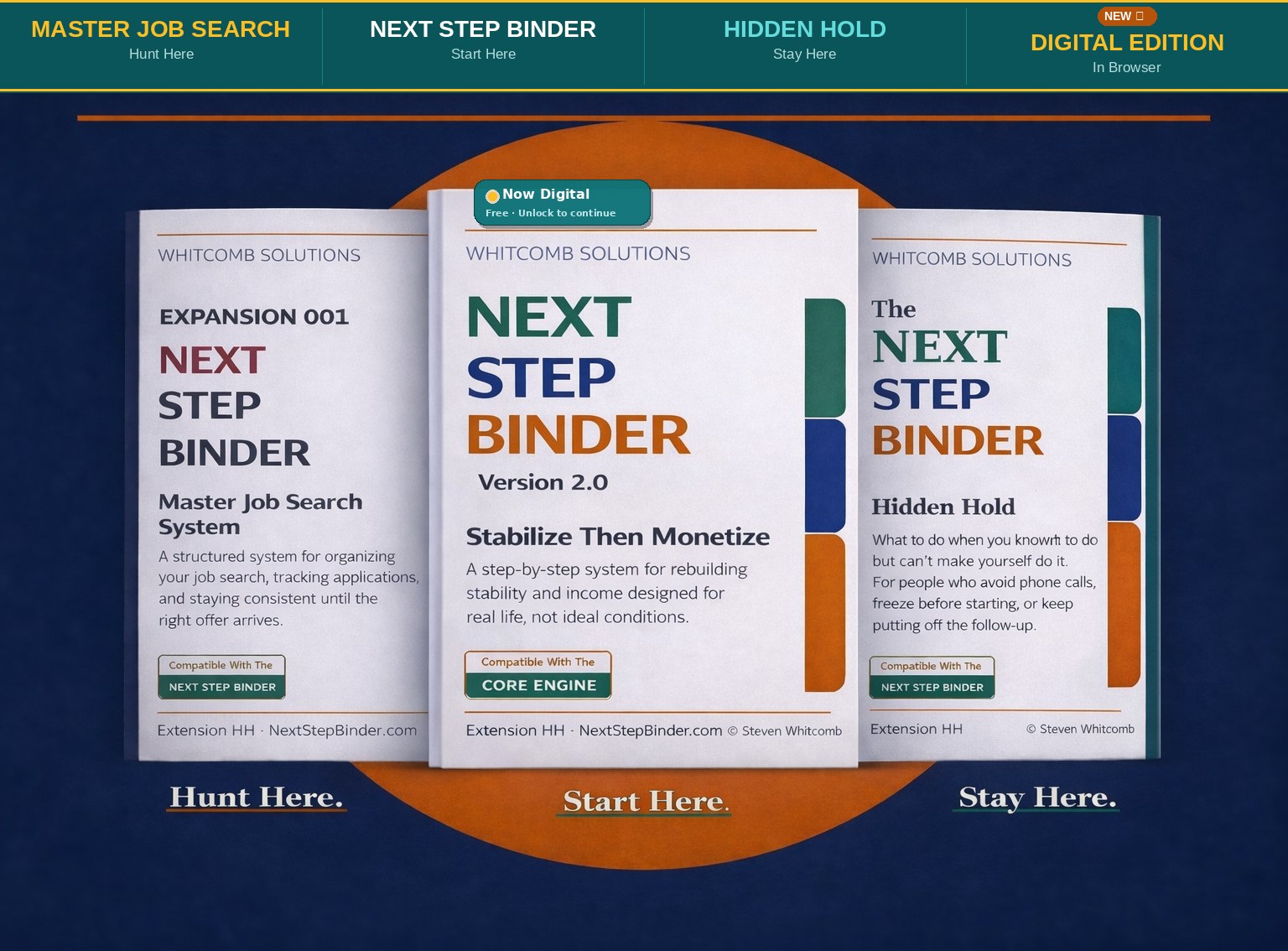
- Works standalone or slots directly into the Next Step Binder